BIRI™ began with a seed network of approximately 2,850 environmental reference domains. These were not randomly harvested web addresses: they provided the starting points for discovering other organisations, institutions and resources connected to environmental work.
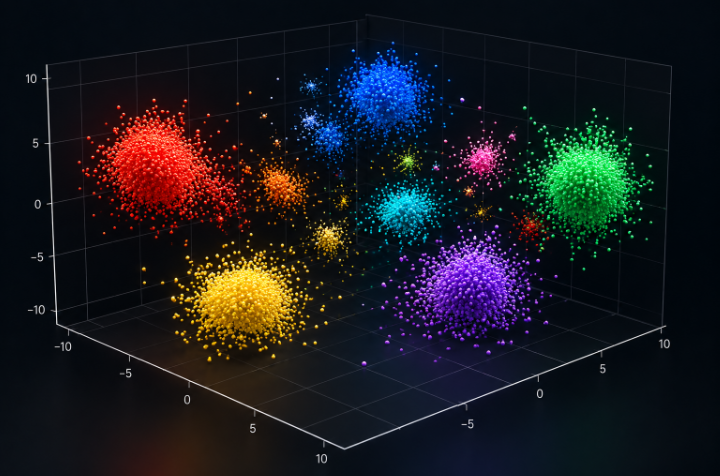
We searched outward from that network, following relevant links to three levels of depth. The process produced approximately 282,000 candidate domains. The candidates included genuine environmental organisations, suppliers, research institutions and public agencies, alongside unrelated businesses, duplicates and websites whose environmental connection was marginal.
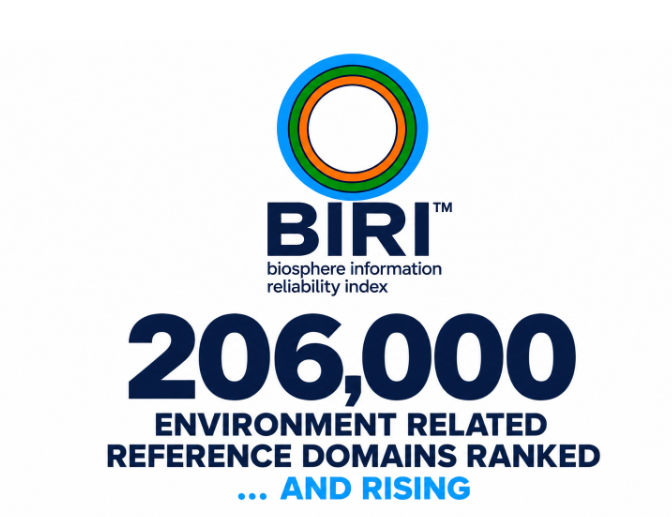
An automated ranking stage then assessed candidates against defined relevance parameters. That reduced the working relevant-domain collection to approximately 206,000. These are different stages: 2,850 seed domains, 282,000 candidates and 206,000 ranked as relevant. A relevant domain is not necessarily a reliable one, and an automated relevance ranking is not an official BIRI™ reliability rating.
We estimate that more than 500,000 domains worldwide could be relevant to the environmental field. That is an estimate, not a completed census. Languages, regional terminology, new organisations and less-connected websites make complete discovery difficult.
The scale also changes the economics. Using search, ordinary software and smaller, lower-cost models for bounded tasks avoids paying for frontier AI on every website. Human and virtual community assessment is a separate activity.
Before publication, the historical counts and the three-level search description should be reconciled against BIRI™’s records. They describe the development journey, not a live dashboard reading.
The figures are approximate: 2,850 seed domains, 282,000 candidates identified through three levels of link discovery and 206,000 ranked as environmentally relevant. We estimate that more than 500,000 domains could be relevant worldwide. Relevance does not equal reliability.