Both — and the split matters more than most people realize.
The model itself doesn’t learn from your conversations. Once training finishes, the model’s knowledge is frozen. When you chat with it, nothing inside changes. No weights shift, no memory forms — the file on disk stays identical. If it “remembers” something from earlier in a conversation, that’s not learning. That’s just the transcript being shown back to it. Close the chat, open a new one, and it’s a stranger again.
What people call learning is usually one of three things. Context: the model reads the current conversation, which acts like short-term memory — gone when the window closes. Retrieval: a tool searches your documents and pastes the relevant bits into the conversation, so the model can consult your knowledge without knowing it. Fine-tuning: actually retraining the model on your material — real learning, but expensive, slow, and unnecessary for most workflows. Retrieval meets many practical needs.
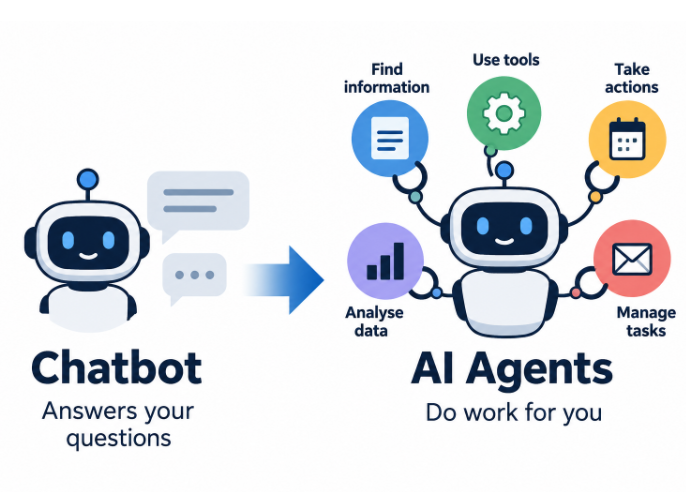
So what is the harness? Everything around the frozen engine. The retrieval that fetches the right documents. The memory that stores facts between sessions. The tools the agent can call. The guardrails, the checkers, the change tracking, the interface. The model alone is a brilliant amnesiac — world-class pattern prediction with no memory, no tools, no access to your archive. The harness is what turns that into a colleague.
Why this matters for you. Two reasons. First, claims like “our AI learns your business” usually mean retrieval and memory features — which you can build yourself, on your own hardware, with open tools. Don’t pay a premium for marketing vocabulary. Second, the harness is where your advantage lives. Everyone has access to the same engines. Nobody else has your archive, your workflows, your verification discipline. The model is interchangeable. The harness is yours.
The model, its supporting tools and the person reviewing the work all have different roles.