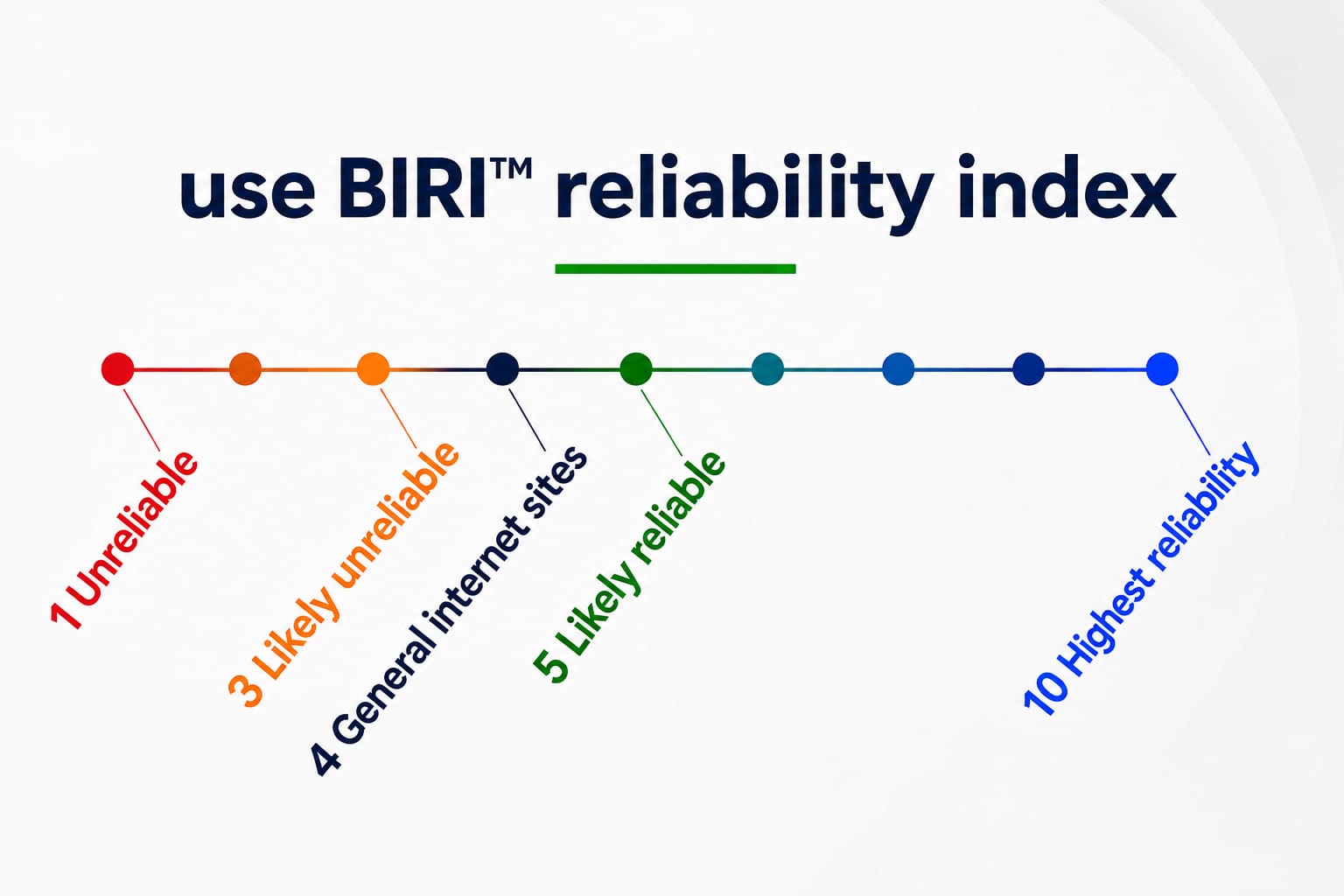
BIRI™ separates three things that search engines often blur: whether a domain is relevant, how reliable the source appears to be and whether a particular claim is correct.
Environmental relevance is assessed when domains enter the candidate collection. Reliability is a separate rating process. BIRI™ uses a 1–10 reliability scale, with official curator ratings distinguished from ratings and judgements contributed by the community. Virtual community members can contribute assessments, but they do not issue official curator ratings.
The difference between the official and community view is not an embarrassment to hide. It can be the most useful signal. Imagine a source with an established curator rating whose recent community assessments become markedly less favourable. That divergence warrants investigation: has the website changed ownership, shifted from evidence to advocacy, or begun publishing material outside its expertise? The reverse can also occur.
The system uses blockchain-audited timestamps as part of its audit trail. A timestamp records that an assessment existed at a particular time; it does not prove that the assessment was correct. Records still need clear provenance, permissions and review procedures.
Data governance must fit the organisation. A small member community does not need the same administrative machinery as a large institution, but both need to know who can change a record and how disagreements are handled.
A rating is a starting point for research. If a consultancy cites a claimed emissions reduction, it must still inspect the underlying measurements and methodology. Reliability is not truth.