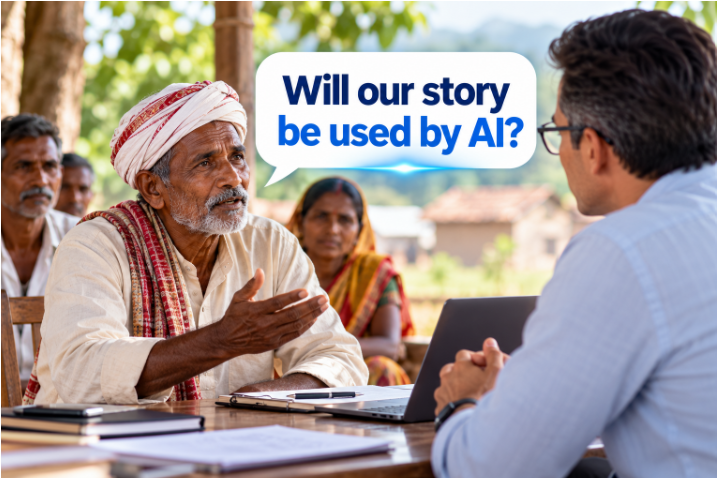
Development and environmental consultants hold a specific kind of data: interviews, surveys, and records from communities — often rural, often vulnerable, often collected with good intentions and thin paperwork.
The core problem. Consent forms from five or ten years ago mention reports, research, and project use. They do not mention AI processing, model training, or automated analysis. Under most modern data protection law — GDPR, Kenya’s Data Protection Act, Brazil’s LGPD — processing beyond what people were told is unlawful regardless of how well you meant it.
Consent here has a power problem. A village elder signing a form presented by a funded consultant isn’t a meeting of equals. Real consent means explaining in local language what will happen to the data, who will see it, how long it’s kept, and — increasingly — that AI may process it. If you can’t explain that clearly, you don’t have consent. Translation quality matters too: a consent form machine-translated into Swahili or Tagalog isn’t consent in the language the signer actually understood.
The risks are collective, not just individual. A data breach exposing names is bad. Worse: location data on water sources, sacred sites, or resource use patterns that outside actors could exploit. Communities can be harmed as groups in ways no individual privacy law catches. Indigenous data sovereignty movements — the CARE principles, Māori data sovereignty work — argue community data belongs under community governance, not in a consultant’s archive.
Practical rules. Never put community data into a cloud model. Ever. That includes “just anonymized” extracts — re-identification is easier than most people think. Revisit consent for any project where AI will touch the material. Build data governance into new projects from day one: what is collected, why, who decides, when it’s destroyed. And consider giving communities a say in how their data is used long after the project ends.
Trust is the real asset here. Communities talk to each other. Firms known to handle data respectfully get access; firms known not to, don’t.
In multilingual community work, consent language matters. A translation of an interview from Thai or Bahasa Indonesia into English may lose a qualification about who may use the material. Keep the original record and ask a competent local-language reviewer to check consent and sensitive terms before AI processing.