Why put some work on a rented virtual private server, or VPS, when there is already a computer in the office? Because not every job should be allowed to reach the same files and services.
Take a public-domain collection task. A remote worker can visit websites, collect candidate URLs and return a limited results file. It does not need the private project archive, member records or permission to change BIRI™ ratings. A separate process can review those candidates before anything enters the main system.
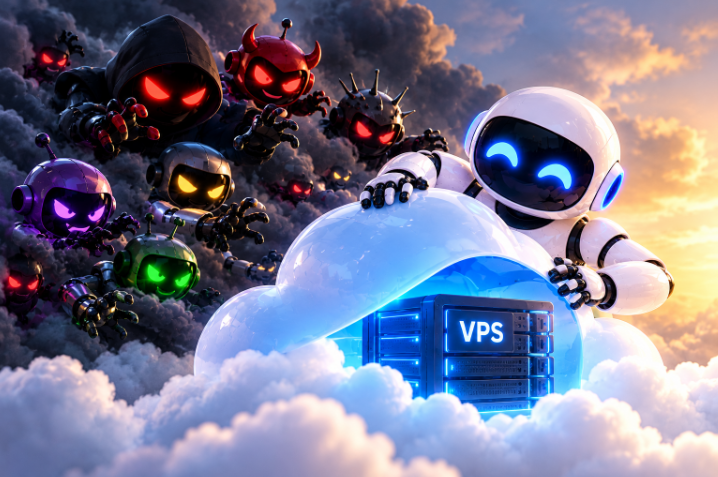
That separation reduces the potential damage if a public website contains malicious instructions or a remote job is compromised. It is not a security guarantee: a poorly configured VPS can still leak data or credentials. The important controls are restricted permissions, short-lived jobs, minimal data and review of outputs.
We have also used rented GPU infrastructure, including Runpod, as an alternative to owning expensive compute for every experiment. A GPU rental and a conventional VPS solve different problems: one supplies processing power; the other can isolate a bounded network-facing task.
For Planetary.Blue, the lesson from failures is to avoid giving one automation every capability just because it is convenient. Separate collection, checking and publication. Keep confidential material out of the external worker’s reach. We will not publish the detailed network topology or access configuration.