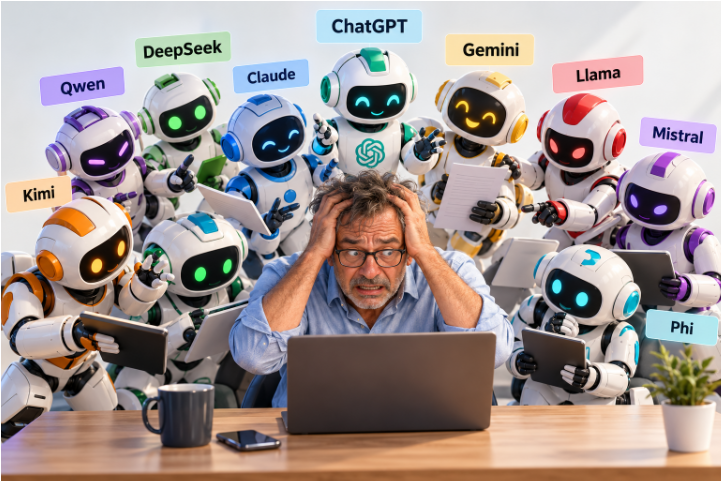
We track AI developments through use cases and lessons learned, not just model announcements. That gives professionals a way to decide whether a new tool deserves attention.
Take three recurring jobs: finding environmental references, extracting tables from reports and producing a short explanatory video. Keep a small set of representative examples for each. When a new model or service appears, test it on the same material. Record accuracy, source quality, processing time, cost and any security issues.
For instance, a new model might write a better summary but invent two citations. Another may be slower but work locally without sending confidential reports to a provider. A rented video model may produce an attractive clip but take repeated attempts to keep technical details consistent. Those are more useful findings than a benchmark score alone.
Record failures as carefully as successes. Did a model lose its formatting? Did an update break the workflow? Did a configuration change require recovery? The lesson may be to keep the older working setup rather than chase the latest release.
Planetary.Blue shares these practical evaluations and lessons with members. Members can contribute their own cases, including what did not work and what it cost.
This approach also limits the time spent following technology news. Review what affects your work, check the evidence and keep using the tools that perform reliably.