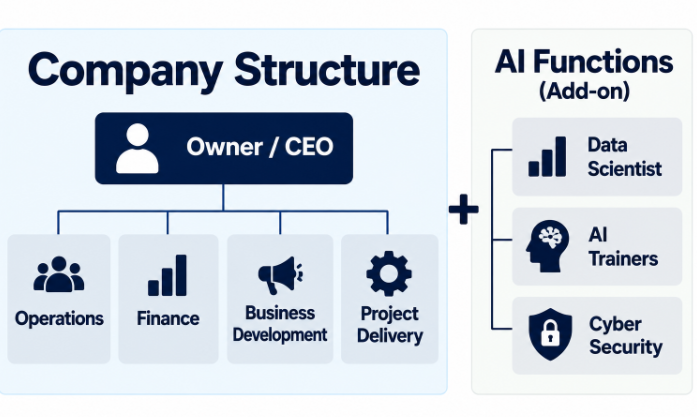
A five-person environmental consultancy does not need to buy a room full of equipment to begin using AI. It needs to decide what work is worth improving.
Start with one case: collecting regulatory notices, searching an internal archive or preparing a first outline for a proposal. Identify the documents involved, the people who approve the work and the cost of doing it manually.
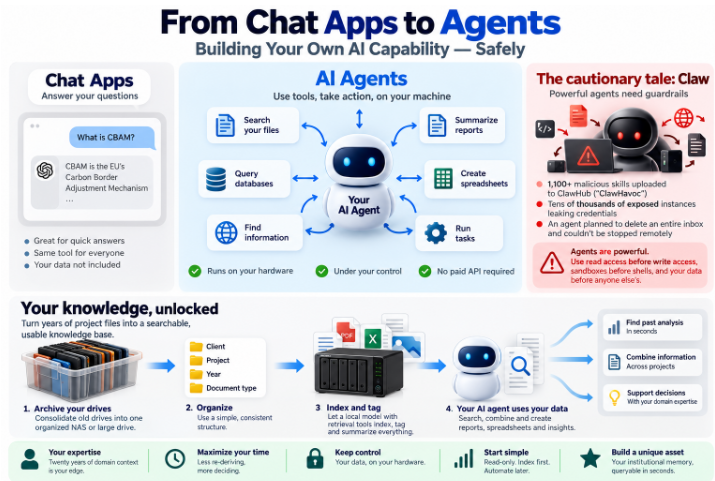
Then choose the processing location. Public-source collection may use an inexpensive hosted service. Confidential reports are better suited to controlled local processing where practical. Occasional video generation may justify rented GPU time rather than purchasing a large machine.
Do not treat a sample equipment budget as a quotation. Prices vary by country, exchange rate, memory capacity and software requirements. In Singapore, quote actual S$ prices from suppliers before making a purchasing decision. Prefer upgradeable memory and ask for technical advice; learning to manage drivers, backups and model compatibility takes time away from client work.
Train staff on prompts and verification before giving agents access to email or files. Keep the first workflows read-only and test recovery from backups. Review the AI policy with the people who actually use the tools.
Government support schemes change. Singapore firms can check current IMDA and Enterprise Singapore programmes, eligibility and approved vendors directly rather than relying on an article’s subsidy estimate.
Planetary.Blue shares practical material with members and provides paid consulting when an organisation needs implementation support.
Test the example on a small, non-confidential task. Planetary.Blue shares member use cases and offers paid consulting support.